
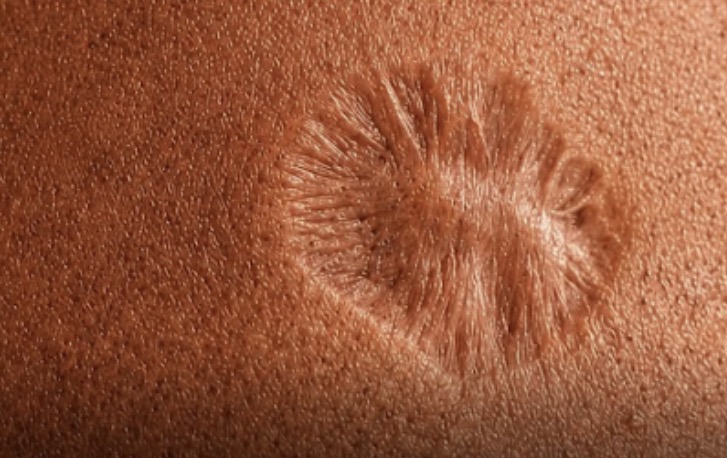
Smallpox Vaccine Scar: Why Does This Happen?
That small, round scar on the upper arm may look like an ordinary mark—but for millions of people, it represents a remarkable chapter in medical history.
The smallpox vaccine scar is more than a blemish. It is a lasting reminder of one of the greatest public health victories ever achieved and of the body’s remarkable ability to heal itself.
During the era of widespread smallpox vaccination, this distinctive mark could even serve as evidence of vaccination and was sometimes checked during health screenings, including at places such as Ellis Island.
Although smallpox was declared eradicated in the United States in the 1950s and routine childhood vaccination ended in the early 1970s, the legacy of the vaccine remains visible on the skin of millions.
Why Does the Smallpox Vaccine Leave a Scar?
The answer lies in the unusual way the vaccine was administered.
Unlike modern vaccines, which are generally delivered with a hypodermic needle into muscle or beneath the skin, the smallpox vaccine used a bifurcated needle.
The needle was dipped into the vaccine solution and then used to make several tiny punctures in the superficial layer of the skin.
The vaccine contained vaccinia virus, a live virus related to smallpox but considerably less dangerous. These controlled punctures allowed the vaccine to trigger a strong local immune response.
And that’s where the familiar scar began to form.
What Happens Under the Skin?
After the vaccine entered the skin, the virus multiplied locally and activated the immune system.
The area typically went through several stages:
- A small raised bump appeared.
- The area developed into a fluid-filled blister.
- The blister eventually hardened into a scab.
- The scab fell away as the skin healed.
- A small circular scar remained.
During healing, the body produced collagen to repair the damaged tissue. However, the new collagen fibers were arranged differently from those in normal skin.
This difference in tissue structure is what can give the finished scar its characteristic round, slightly depressed appearance.
Why Does the Scar Look Different From Person to Person?
Not everyone develops exactly the same type of scar.
For most people, the mark is small, circular, and slightly indented. It is usually harmless and doesn’t require treatment.
However, the appearance can vary depending on genetics and how an individual’s skin responds during healing.
Some people may develop thicker or raised scar tissue known as keloids. Others may occasionally experience itching or a feeling of tightness around the area.
These differences demonstrate just how differently the human body can respond to the same medical procedure.
Can You Get Rid of a Smallpox Vaccine Scar?
For most people, treatment isn’t medically necessary. However, someone who dislikes the appearance of the scar may consider cosmetic options.
One of the simplest measures is protecting the scar from sunlight. Ultraviolet exposure can cause scar tissue to become darker and more noticeable.
Some people also use moisturizing products or topical treatments such as aloe vera or cocoa butter, although their effectiveness can vary considerably.
For more noticeable scars, dermatologists or other medical professionals may consider procedures such as:
- Dermabrasion
- Surgical scar revision
- Skin grafting
For raised keloid scars, treatments such as silicone dressings or specialized medicated gels may help reduce their size and appearance.
Results, however, aren’t always predictable.
Is the Smallpox Scar Dangerous?
In the overwhelming majority of cases, no.
A typical smallpox vaccination scar is simply the result of the body’s healing process and does not pose a health risk.
It is essentially a permanent reminder of an immune response that occurred many years ago.
Smallpox Vaccine Scar vs. Other Vaccine Scars
The smallpox vaccine isn’t the only vaccine capable of leaving a visible mark.
For example, the BCG vaccine, which protects against tuberculosis, can also leave a scar.
However, the smallpox vaccination scar has a particularly recognizable appearance and is strongly associated with a specific period in medical history.
For people who grew up after routine smallpox vaccination ended, seeing this unusual circular mark can naturally raise questions about where it came from.
More Than Just a Scar
Today, a small circular mark on someone’s arm can tell a much bigger story.
It represents an era when smallpox was a major threat—and the enormous global effort to eliminate it.
The scar also demonstrates something fascinating about the human body: a tiny, intentional injury can trigger an immune response, healing process, and permanent physical reminder.
What looks like a simple mark is actually a small piece of medical history etched into the skin.
Do you or someone in your family still have this distinctive scar? You may be surprised by the story behind it.