
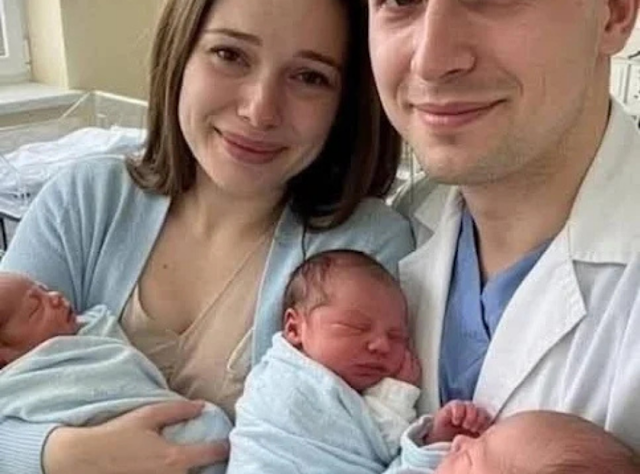
A young mother smiled as she held her three newborn babies—two boys and a little girl—against her chest.
She looked exhausted, but happy.
She had just become a mother of three.
Her name was Aaliyah.
She was only 19 years old.
And less than 24 hours after that beautiful moment, she was gone.
Everyone Thought the Hardest Part Was Over
The pregnancy had been complicated because she was carrying triplets, but the babies were born safely.
They were breathing.
They were feeding.
They were doing well.
Her family was celebrating.
Her partner was beside her.
The doctors had reassured everyone that the babies were healthy.
It seemed like the beginning of the happiest chapter of her life.
Then, everything changed.
Aaliyah began experiencing shortness of breath.
Then came chest pain.
Her blood pressure suddenly dropped.
Medical staff rushed to help her, but her condition deteriorated incredibly quickly.
Doctors believed she may have suffered an amniotic fluid embolism, a rare and potentially catastrophic complication that can occur during or shortly after childbirth.
And that’s what makes cases like this so frightening.
It can happen suddenly, even when a mother appears healthy.
How Can a Young, Healthy Mother Die After Giving Birth?
An amniotic fluid embolism is extremely rare and difficult to predict.
When it occurs, it can cause sudden problems involving breathing, the heart, blood pressure, and blood clotting.
It requires immediate emergency treatment.
There may be little warning.
One moment, a mother can appear stable.
Minutes later, she can be fighting for her life.
That is why unusual symptoms after childbirth should never simply be dismissed as exhaustion, anxiety, or the normal discomfort of being a new mother.
The Danger Doesn’t Always End When the Baby Is Born
Many people assume that once the baby is safely delivered, the greatest danger has passed.
But the postpartum period can also involve serious complications, including heavy bleeding, blood clots, infection, high blood pressure, and heart problems.
That’s why mothers need to be watched and cared for—not just during labor, but after delivery too.
Especially when a mother says:
“Something doesn’t feel right.”
That sentence should never be ignored.
Warning Signs Every New Mother Should Know
Seek urgent medical attention if you experience:
- Sudden shortness of breath or difficulty breathing.
- Chest pain or pressure.
- A racing or irregular heartbeat.
- A severe or persistent headache.
- Changes in vision.
- Sudden or severe swelling.
- Pain or swelling in one leg.
- Heavy vaginal bleeding.
- Fever or chills.
- Severe or unusual abdominal or back pain.
- A strong feeling that something is seriously wrong.
Sometimes the most important warning sign is simply:
“I don’t feel right.”
Don’t be afraid to speak up.
Don’t worry about being a bother.
And don’t stop asking for help if you feel that something is wrong.
A Tragedy That Didn’t End With Her Death
Aaliyah left behind three newborn babies.
Three children who will grow up learning about their mother through photographs, stories, and memories shared by others.
Her partner was left to raise three babies while carrying the unimaginable grief of losing the woman he loved.
And her family was left with the question no family ever wants to ask:
How could this happen when everything seemed to be okay?
Her story is a painful reminder that childbirth is not always the end of the danger.
A mother needs care and attention after delivery just as much as she needs it during pregnancy.
Don’t Ignore the Warning Signs
If you’re a new mother and something feels unusual, tell someone you trust and seek medical attention promptly.
And if you know a new mother, don’t only ask:
“How is the baby?”
Ask her:
“How are YOU feeling?”
Ask whether she’s breathing normally.
Ask whether she’s in pain.
Ask whether anything feels different or wrong.
Sometimes, a simple question can make a difference.
Because the baby needs its mother—and the mother needs someone to listen.
When it comes to your health, don’t be afraid to speak up. If something feels seriously wrong after childbirth, seek urgent medical care.