
How to Pick the Sweetest Watermelon Every Time: Simple Tips That Really Work
Few things are as refreshing as a perfectly ripe watermelon on a warm day. Whether you’re planning a family picnic, hosting a backyard barbecue, or simply craving a healthy snack, choosing the right watermelon can make all the difference.
The challenge is that you can’t see what’s inside before you buy it. Fortunately, nature provides several clues on the outside that can help you find a watermelon that’s juicy, sweet, and bursting with flavor.
If you enjoy practical food tips like this, be sure to subscribe to our newsletter so you never miss our latest kitchen guides, seasonal produce tips, and healthy recipes delivered straight to your inbox.
Why Learning to Choose a Ripe Watermelon Matters
Not every watermelon is harvested at peak ripeness. Some are perfectly sweet and crisp, while others may taste watery or bland. Knowing what to look for helps you spend your money wisely and increases your chances of bringing home a delicious fruit every time.
What Makes a Great Watermelon?
A ripe watermelon is typically:
Naturally sweet
Juicy and refreshing
Crisp rather than mushy
Heavy for its size
Bright red inside with firm flesh
Although no method is guaranteed, combining several visual clues gives you the best chance of selecting a winner.
1. Look for a Dull, Deep Green Rind
The watermelon rind offers one of the first hints about ripeness.
Choose watermelons that have:
A deep green color
A dull or matte finish
Firm, smooth skin
Avoid fruit that appears:
Extremely shiny
Very pale green
Soft or damaged
A glossy rind often means the watermelon was picked before it had enough time to fully ripen.
2. Find the Creamy Yellow Field Spot
One of the easiest indicators of ripeness is the field spot. This is the area where the watermelon rested on the ground while growing.
The ideal field spot should be:
Creamy yellow
Golden yellow
Clearly visible
Avoid watermelons with:
White field spots
Very light yellow patches
A rich yellow field spot usually means the fruit stayed on the vine long enough to develop its natural sweetness.
3. Check the Stripe Pattern
Healthy watermelons usually display strong contrast between their light and dark green stripes.
Look for:
Bold, well-defined stripes
Even coloring
Consistent patterns across the rind
While stripe patterns alone don’t guarantee sweetness, they can be another helpful sign when combined with the other indicators.
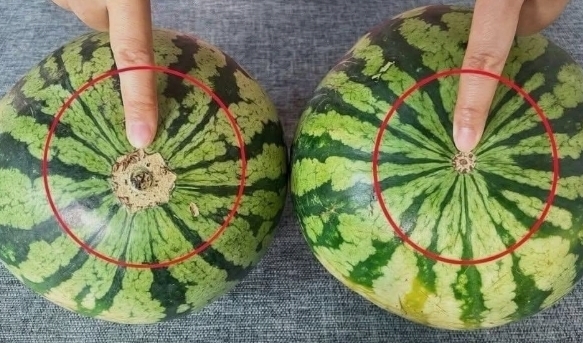
4. Examine the Blossom End
Turn the watermelon over and inspect the blossom end, sometimes called the “belly button.”
A quality watermelon typically has:
A small blossom scar
A neatly closed end
Larger blossom scars may suggest the fruit did not mature as evenly before harvest.
5. Pick Up the Watermelon
Weight matters.
A ripe watermelon should feel surprisingly heavy compared to its size. Because watermelon contains more than 90% water, heavier fruit often contains more juice and has developed properly.
If two watermelons are about the same size, choose the heavier one.
6. Try the Tap Test
Many experienced shoppers gently tap the watermelon before placing it in their cart.
Listen for:
A deep, hollow sound, which often suggests good ripeness
Avoid:
A dull or flat sound, which may indicate an underripe or overripe fruit
While this method isn’t perfect, it’s a useful final check.
7. Avoid Signs of Damage
Even a ripe watermelon won’t stay fresh if it’s damaged.
Skip watermelons with:
Deep cuts
Soft spots
Large bruises
Cracks
Mold
Minor scratches on the surface are generally harmless and don’t affect the fruit inside.
Health Benefits of Watermelon
Besides tasting amazing, watermelon is packed with nutrients that support overall health.
It provides:
Vitamin C for immune support
Vitamin A for healthy skin and vision
Potassium to help maintain normal muscle function
Lycopene, a powerful antioxidant
Plenty of water to help keep you hydrated
Because it’s naturally low in calories and high in water content, watermelon is a smart choice for healthy snacking during warm weather.
How to Store Watermelon
Whole Watermelon
Store at room temperature until cut.
Keep it away from direct sunlight.
Wash the outside before slicing.
Cut Watermelon
Refrigerate immediately.
Store in an airtight container or wrap tightly.
Enjoy within 3 to 5 days for the best taste and texture.
Frequently Asked Questions
How can I tell if a watermelon is ripe?
Look for a dull green rind, a creamy yellow field spot, strong stripe patterns, a small blossom end, and a heavy weight.
Is a shiny watermelon good?
Usually not. A shiny rind can indicate the fruit was harvested before it fully ripened.
Why is the yellow field spot important?
It shows where the watermelon rested on the ground while growing. A creamy yellow spot often means the fruit had enough time to mature naturally.
Should a watermelon feel heavy?
Yes. The heavier the watermelon feels for its size, the more likely it is to be juicy.
How long does sliced watermelon stay fresh?
Stored in an airtight container in the refrigerator, sliced watermelon is best eaten within 3 to 5 days.
Final Thoughts
Choosing a delicious watermelon doesn’t have to be a guessing game. By checking the rind, inspecting the yellow field spot, examining the stripes, lifting the fruit, and listening for a hollow sound, you’ll greatly improve your chances of selecting a sweet and juicy watermelon.
The next time you’re shopping at the grocery store or local farmers market, take a few extra moments to inspect each watermelon carefully. Those simple checks can help you enjoy a refreshing fruit that’s full of flavor and perfect for sharing all summer long.
If you found these tips helpful, leave a comment below and share your favorite watermelon-picking trick. We’d also love to see your fresh summer creations—share your photos on Pinterest and inspire others to enjoy this seasonal favorite.
Nutritional Information (Approximate Per 1 Cup Serving)
Calories: 46
Carbohydrates: 12 g
Sugar: 9 g
Fiber: 1 g
Protein: 1 g
Fat: 0 g
Vitamin C: 21% Daily Value
Vitamin A: 18% Daily Value
Potassium: 170 mg
Water Content: Over 90%